
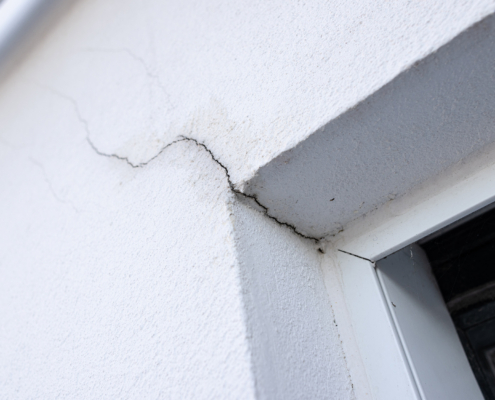
 https://www.amprconsulting.com/wp-content/uploads/2026/11/Stucco-Inspection-Before-an-HOA-Files-a-Defect-Claim.jpg
1250
2000
Abstrakt Marketing
/wp-content/uploads/2025/11/AMPR-Logo-Color-300x100.png
Abstrakt Marketing2026-11-23 07:12:292026-11-23 07:16:12Stucco Inspection Before an HOA Files a Defect Claim
SB 800 California, formally the Right to Repair Act, requires a homeowner or association to give the builder written notice and an opportunity to inspect and repair before filing most construction defect lawsuits over new residential construction. The process has short deadlines on both sides. How well the board uses it decides how strong the claim is afterward. AMPR Consulting is not a law firm. AMPR coordinates the technical work and the experts so that the board’s notice, and everything after it, rests on documented facts. AMPR works alongside the association’s counsel as part of its HOA construction defect support.
Get the defect record in order before the notice goes out. The notice sets the scope of the builder’s inspection and repair offer.
What Is SB 800, California’s Right to Repair Act?
SB 800 is codified at Civil Code sections 895 through 945.5. It sets building performance standards for new homes. It also sets a mandatory prelitigation process, which means a set of steps that must happen before a lawsuit is filed. Many boards search for it as the Right to Repair Act California process.
Who the Act Covers
- Associations are claimants. Under Civil Code 895, a “claimant” includes the association in a common interest development.
- Common areas are covered. A covered “structure” includes improvements located within a common area.
- Associations have standing. Section 945 treats associations as original purchasers with standing to enforce the Act.
- Newer construction only. The Act applies to new residential units where the seller signed the purchase agreement on or after January 1, 2003 (§ 938), and to original construction intended to be sold as individual dwelling units.
What the Act Measures
Section 896 sets the functional standards. They ask whether windows, roofs, decks, stucco, foundations, plumbing and other components do what they are supposed to do. A claim under the Act alleges a violation of those standards. The window standard, for example, covers water that passes around a window as well as water that passes through it. That is why the testing has to reach the installation, not only the unit. See ASTM E1105 vs. AAMA 502 window water testing.
Why SB 800 Applies Even When the Claim Is Pleaded Differently
In McMillin Albany LLC v. Superior Court (2018) 4 Cal.5th 241, the California Supreme Court held that the Act’s prelitigation procedures apply to construction defect claims in new residential construction no matter how the claims are pleaded. Personal injury claims are outside its reach. A claim framed as negligence still runs through the SB 800 process.
For boards, the practical point is that skipping the process is rarely an option. Use the process to build the record.
The SB 800 Process Step by Step
Each deadline below comes from the Civil Code. Boards typically work with counsel to calendar each one from the date of the event that starts it.
Step 1: The Association’s Written Notice
The notice goes to the builder by certified mail, overnight mail or personal delivery. It must include the claimant’s name, address and preferred contact method. It must also describe the claim in enough detail to show the nature and location of each claimed violation. An association may identify claimants by address (Civil Code § 910). A request made through the builder’s normal customer service process does not count as notice.
Step 2: The Builder’s Acknowledgment
The builder must acknowledge receipt in writing within 14 days after it receives the notice (§ 913).
Step 3: The Builder’s Inspection
The builder must complete its initial inspection and testing within 14 days after it acknowledges the notice. If it needs a second inspection, it must give written reasons within three days after the first. It must complete the second inspection within 40 days of the initial inspection (§ 916).
Step 4: The Repair Offer
The builder’s written offer to repair is due within 30 days after the initial or second inspection (§ 917). The offer must describe the proposed repair in detail and include a completion date.
Step 5: The Association’s Options
The association has 30 days to authorize the repair. It may instead ask for the names of three alternative contractors, which starts further deadlines (§ 918). The Act also provides for mediation on request (§ 919).
Step 6: Repair Completion
An accepted repair must start within 14 days of acceptance. If an alternative contractor is selected, mediation ends or a permit is required, set periods after those events apply instead. The statute says every effort shall be made to complete the repair within 120 days (§ 921).
| Step | Who acts | Deadline | What the HOA should have ready |
| Notice (§ 910) | Association | Before filing suit | Documented defect list by location, photos, test data, prior reports |
| Acknowledgment (§ 913) | Builder | 14 days after receipt of notice | Tracking of delivery date; a single point of contact |
| Initial inspection (§ 916) | Builder | 14 days after acknowledgment | Access plan, the association’s own consultant present, independent photo log |
| Second inspection (§ 916) | Builder | Within 40 days of initial | Written reasons from the builder; record of what was tested |
| Repair offer (§ 917) | Builder | 30 days after inspection | Independent scope to compare against the offer |
| Association response (§ 918) | Association | 30 days after offer | Board decision informed by counsel and technical review |
| Repair start / completion (§ 921) | Builder | Start within 14 days of acceptance; every effort to finish within 120 days | Monitoring and documentation of the repair work |
How Long the Full Process Can Take
Add up the maximum periods and the timeline becomes clear. Suppose both sides use their full time, with a second inspection:
- Day 14: the builder acknowledges the notice.
- Day 28: the initial inspection is complete.
- Day 68: the second inspection is complete.
- Day 98: the repair offer arrives.
- Day 128: the board’s response is due.
- Day 142: the repair starts.
- About day 262: the 120-day completion target.
That is roughly four to nine months from notice to finished repair, before any alternative contractor or mediation steps. Boards that plan for this time can use it to finish their own testing.
What Happens If the Builder Misses an SB 800 Deadline
If the builder does not acknowledge the notice, does not inspect on time or elects not to go through the process, the Act provides that the claimant may file an action (§§ 915, 916). If the builder misses the offer deadline or does not strictly comply, the claimant is released from the remaining requirements (§ 920). The same is true if repairs are not completed within the agreed time (§ 925).
A missed deadline does not end the board’s need for evidence. The association still has to prove the defects and their cost, so the documentation work continues either way.
Check the Governing Documents for an Alternative Procedure
The Act lets a builder elect, in the original purchase agreement, to use its own nonadversarial procedure instead of the statutory one (§ 914). Boards should have counsel review the purchase documents and the CC&Rs (covenants, conditions and restrictions) early. The builder’s procedure, and any arbitration clause, can change the steps and timing.
SB 800 Deadlines: Statute of Limitations vs. Statute of Repose
A statute of limitations is a filing deadline that typically starts when a problem is discovered. A statute of repose is an outer deadline that runs from a fixed date, such as completion, whether or not anyone has found the problem.
The 10-Year Outer Limit
SB 800 sets a 10-year outer limit. No action may be brought more than 10 years after substantial completion (Civil Code § 941).
Shorter Periods for Specific Components
Within that limit, Civil Code § 896 sets shorter periods for some components:
- One year: noise transmission between units (from original occupancy of the adjacent unit); irrigation and drainage.
- Two years: untreated wood posts in soil; landscaping systems; dryer ducts.
- Four years: plumbing and sewer; electrical; exterior pathways, driveways and hardscape; untreated steel fences.
- Five years: paint and stains.
When the Clock Starts for an Association
For associations, “close of escrow” means the later of two dates: substantial completion, or the date the builder gave up control over the association’s ability to decide whether to bring a claim (§ 895(e)). For a board that took control from the developer recently, that second date can matter more than the completion date. For other California deadlines, see our guide to the construction defect statute of limitations, which covers California rules and other states.
What the Board Should Document Before Sending Notice
A weak notice produces a narrow inspection and a narrow repair offer. A strong notice is built on a documented record:
- A defect list by building, unit and elevation, tied to locations a builder can find.
- Owner and manager complaint logs with dates.
- Photos and video of active leaks, cracking, staining and failed components.
- Independent testing where the problem is behind the finish, such as moisture readings or test openings.
- Prior reports, including reserve studies and SB 326 balcony inspections (Civil Code § 5551).
- Maintenance records that show the association kept up its own obligations.
The last item matters more than boards expect. The builder will look for maintenance arguments first, so a clean maintenance file removes one of its easiest defenses.
The Builder’s Inspection Is Evidence Gathering for the Builder
The builder’s inspection is the builder’s chance to see the conditions, test them and form its own view of cause and scope. Its findings will shape the repair offer and, if the claim continues, the builder’s defense. The board should have its own consultant present and keep an independent photo and sample log. The board’s own documentation should be complete before the builder arrives. Our guide to construction expert witness selection covers how to set up that consultant role.
BEFORE THE NOTICE GOES OUT
The board’s notice sets the scope of the builder’s inspection and repair offer. Have the defect record and notice checked against the evidence before it is served.
The Risk of Accepting a Repair Offer Too Early
A repair offer covers the defects the builder saw and agreed to address. If the full scope is not known, acceptance can leave hidden conditions outside the repair, such as water damage behind cladding that was never opened. Before the board votes, it should compare the offer against an independent scope and have counsel explain what acceptance means for the remaining claims.
Repair Offers vs. Cash Offers
The Act says the builder may not obtain a release or waiver in exchange for the repair work the Act requires (§ 926). A builder may also offer cash instead of a repair (§ 929), and a cash offer can come with a release. A cash number that looks fair against today’s visible damage can be low against the scope that testing finds later.
How SB 800 Fits With the Calderon Process
Associations also face the Calderon process under Civil Code section 6000. It is a separate prelitigation procedure for common interest developments. Where the parties have completed SB 800 steps that are substantially similar to Section 6000 requirements, they do not have to repeat them (§ 935). Boards typically work with counsel to sequence the two.
Member Notice Before Filing
Separate from both processes, the Davis-Stirling Act requires the board to notify members in writing before it files certain actions against the developer (Civil Code § 6150). Put this step on the calendar from the start so it does not delay a filing.
Frequently Asked Questions
Can an HOA reject a builder’s repair offer under SB 800?
After an offer, the Act gives the association three choices: authorize the repair, ask for alternative contractors or ask for mediation. Declining an offer has consequences that counsel should explain before the board votes. For that reason, boards typically compare the offer against an independent scope first.
Can a builder offer cash instead of repairs?
Yes. The Act lets a builder offer a cash payment instead of a repair, and that payment can come with a release. The statutory repair itself cannot be conditioned on a release. Compare any cash number against an independent repair scope before the board responds.
Does SB 800 apply to condominium common areas?
Yes. Civil Code 895 includes associations as claimants and defines a covered structure to include improvements within a common area. The Act applies to new residential units sold under purchase agreements signed on or after January 1, 2003.
How long does the builder have to respond to an SB 800 notice?
The builder must acknowledge in writing within 14 days and complete its initial inspection within 14 days after that. It must make a written repair offer within 30 days after the inspection. If the builder needs a second inspection, it must finish it within 40 days of the first.
What happens if the builder ignores the SB 800 notice?
If the builder does not acknowledge, inspect or offer on time, the Act provides that the association may file an action. The board still needs a documented record of the defects and their cost to move forward. The AMPR construction defect claims process shows how that record is built.
Does SB 800 apply if the HOA sues for negligence?
Generally, yes. In McMillin Albany (2018), the California Supreme Court held that the Act’s prelitigation procedures apply to construction defect claims in new residential construction no matter how they are pleaded. Personal injury claims are excluded.
What is the deadline to file an SB 800 claim?
The outer limit is 10 years from substantial completion. Civil Code 896 sets shorter periods for some components, and some are as short as one year. See our construction defect statute of limitations guide and confirm the dates with counsel.
Does the board have to tell owners before suing the builder?
In many cases, yes. Civil Code section 6150 requires written notice to members before the association files certain actions against the developer. Counsel confirms when the requirement applies and how much notice is due.
Who prepares the SB 800 notice for an HOA?
Boards typically work with counsel on the notice itself. AMPR coordinates the testing and documentation that the notice relies on, as part of its construction defect claims consulting. For the defect types the Act’s standards cover, see what is a construction defect.
Use the SB 800 Process to Build the Record
SB 800 is a required step for most California HOA defect claims, and its short deadlines reward boards that prepare. Document the defects by location and test what is hidden. Attend the builder’s inspection with your own consultant. Compare any repair offer against an independent scope before the board votes. AMPR coordinates that technical work and the experts from the start, alongside the association’s counsel, with a resolution-first approach designed to avoid litigation when possible. Past matters are on our client results page.
Build the board’s defect record before the builder inspects. Contact AMPR, see how AMPR handles construction defect claims in California, or call (310) 361-0209. The first conversation is a no-cost initial conversation, and engagement terms are discussed openly.
https://www.amprconsulting.com/wp-content/uploads/2026/11/Stucco-Inspection-Before-an-HOA-Files-a-Defect-Claim.jpg
1250
2000
Abstrakt Marketing
/wp-content/uploads/2025/11/AMPR-Logo-Color-300x100.png
Abstrakt Marketing2026-11-23 07:12:292026-11-23 07:16:12Stucco Inspection Before an HOA Files a Defect Claim https://www.amprconsulting.com/wp-content/uploads/2026/11/Construction-Expert-Witness-Selection-for-Owners.png
1250
2000
Abstrakt Marketing
/wp-content/uploads/2025/11/AMPR-Logo-Color-300x100.png
Abstrakt Marketing2026-11-23 06:59:092026-11-23 06:59:14Construction Expert Witness Selection for Owners
 https://www.amprconsulting.com/wp-content/uploads/2026/11/ASTM-E1105-vs.-AAMA-502-Window-Water-Testing.png
1250
2000
Abstrakt Marketing
/wp-content/uploads/2025/11/AMPR-Logo-Color-300x100.png
Abstrakt Marketing2026-11-23 06:53:122026-11-23 06:53:19ASTM E1105 vs. AAMA 502 Window Water Testing
 https://www.amprconsulting.com/wp-content/uploads/2026/10/What-to-Do-When-Your-Insurance-Companys-Inspection-Doesnt-Match-What-Youre-Seeing.jpg
1250
2000
Abstrakt Marketing
/wp-content/uploads/2025/11/AMPR-Logo-Color-300x100.png
Abstrakt Marketing2026-10-08 11:12:322026-10-08 11:12:37What to Do When Your Insurance Company’s Inspection Doesn’t Match What You’re Seeing
 https://www.amprconsulting.com/wp-content/uploads/2026/10/What-To-Expect-When-Your-Lender-Requires-a-Property-Condition-Assessment.jpg
1250
2000
Abstrakt Marketing
/wp-content/uploads/2025/11/AMPR-Logo-Color-300x100.png
Abstrakt Marketing2026-10-08 11:06:412026-10-08 11:06:47What To Expect When Your Lender Requires a Property Condition Assessment
 https://www.amprconsulting.com/wp-content/uploads/2026/10/What-to-Look-for-When-Choosing-a-Construction-Defect-Consultant-1.jpg
1250
2000
Abstrakt Marketing
/wp-content/uploads/2025/11/AMPR-Logo-Color-300x100.png
Abstrakt Marketing2026-10-08 08:51:132026-10-08 08:51:18Latent Defect Insurance Claims: What Coverage Professionals Need to Verify
 https://www.amprconsulting.com/wp-content/uploads/2026/10/What-to-Look-for-When-Choosing-a-Construction-Defect-Consultant.jpg
1250
2000
Abstrakt Marketing
/wp-content/uploads/2025/11/AMPR-Logo-Color-300x100.png
Abstrakt Marketing2026-10-08 08:45:492026-10-08 08:45:54What to Look for When Choosing a Construction Defect Consultant
 https://www.amprconsulting.com/wp-content/uploads/2026/10/What-Your-Construction-Contract-Doesnt-Tell-You-About-Defect-Liability.jpg
1250
2000
Abstrakt Marketing
/wp-content/uploads/2025/11/AMPR-Logo-Color-300x100.png
Abstrakt Marketing2026-10-08 08:33:422026-10-08 08:34:17What Your Construction Contract Doesn’t Tell You About Defect Liability
 https://www.amprconsulting.com/wp-content/uploads/2026/08/The-exterior-facade-of-a-generic-small-business.jpg
1250
2000
Abstrakt Marketing
/wp-content/uploads/2025/11/AMPR-Logo-Color-300x100.png
Abstrakt Marketing2026-08-27 08:54:592026-08-27 08:55:09Property Risk Management for Commercial Real Estate: When a Formal Assessment Changes the Outcome